Digital Life

Most people assume their family will “figure things out” if something happens to them.
But in real life, it usually does not work like that.
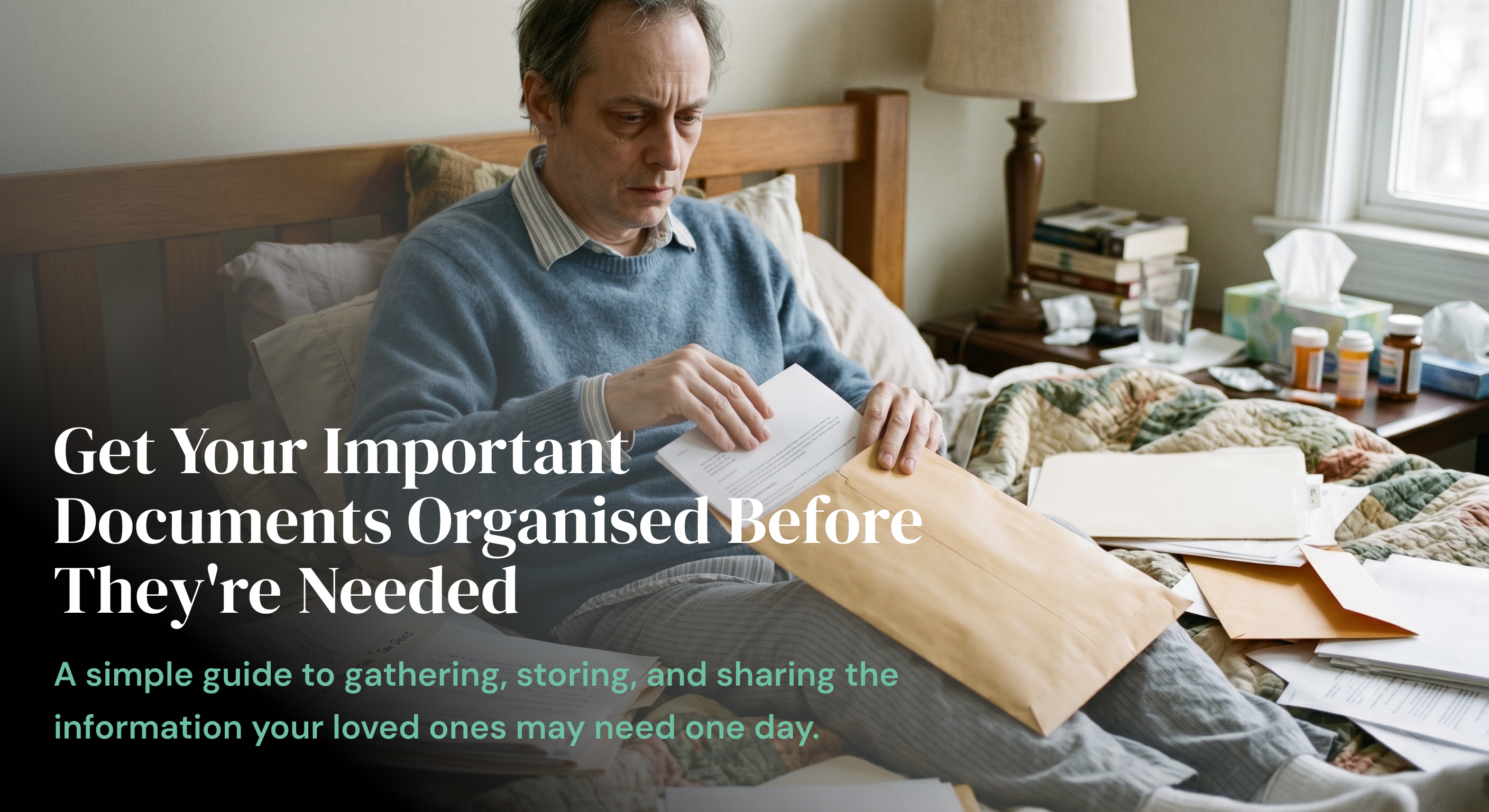
People are grieving. They are stressed. They are trying to make decisions quickly. And the smallest missing detail can turn into hours, days, or even weeks of searching.
Bank accounts can be hard to identify. Insurance claims can be delayed. Important decisions can get stuck.
Not because anything is necessarily complicated, but because no one knows where everything is.
That is why organising your most important documents is one of the simplest ways to protect the people you love.
Download the checklist
Want a simple version you can keep or print?
Download the 12-document checklist
The 12 documents and details your family would need
Here are the key things your family would most likely need if something happened to you.
1. Your will
Your will is usually one of the first things people look for.
It helps clarify your wishes and gives your family direction at a time when they may not know what to do next.
If you have a will, make sure someone you trust knows where it is stored.
2. ID documents
Your family may need copies of your passport, ID card, driving licence, birth certificate, or other official identification documents.
These can be needed for banks, insurance providers, legal processes, property matters, and other official steps.
3. Bank account details
Your loved ones may need to know which banks you use and what accounts exist.
This does not mean sharing full access with everyone. It means making sure the right person can identify where your financial accounts are held if they need to.
Many families do not struggle because there is no money available. They struggle because they do not know where to look.
4. Insurance policies
Insurance is one of the most important areas to organise.
This may include:
- life insurance
- health insurance
- home insurance
- car insurance
- travel insurance
- business insurance
If your family cannot find your policies, they may not know what can be claimed. In some cases, benefits can go unused simply because no one knew the policy existed.
5. Property documents
If you own a home, land, rental property, or other major assets, your family may need to find the related documents.
This can include ownership papers, mortgage information, rental agreements, title deeds, or property tax details.
Even knowing where these documents are stored can save a huge amount of stress.
6. Pension and investment information
Pensions, investments, shares, savings plans, and crypto accounts can easily be forgotten if they are not written down somewhere.
Your family may not know which providers you use, what accounts exist, or who to contact.
You do not need to list every tiny detail publicly. But you should make sure your trusted person knows what exists and where to find more information.
7. Debts and liabilities
This includes loans, credit cards, personal debts, finance agreements, and any outstanding payments.
It is not the most comfortable thing to organise, but it is important.
Your family should not have to discover financial obligations one letter or phone call at a time.
8. Digital accounts
So much of modern life is online.
Your family may need to know about:
- email accounts
- cloud storage
- social media accounts
- subscription services
- online banking portals
- important apps or platforms
Even if you use a password manager, someone needs to know that it exists and how emergency access should work.
9. Medical information
In an emergency, medical information can be critical.
This may include:
- medications
- allergies
- medical conditions
- blood type
- doctor or GP details
- important health wishes or preferences
This is especially useful for spouses, adult children, carers, or anyone who may need to act quickly on your behalf.
10. Emergency contacts
Your family should know who to contact if something happens.
This could include:
- next of kin
- solicitor
- accountant
- financial advisor
- doctor
- close friend
- business partner
- key family contact
These people may hold important information or be able to help your family take the next steps.
11. Important instructions
Not everything is a formal legal document.
Sometimes the most helpful information is practical.
For example:
- how bills are paid
- where spare keys are kept
- who looks after pets
- what subscriptions should be cancelled
- where important paperwork is stored
- what your family should know first
These simple instructions can make a very difficult time feel a little less chaotic.
12. Access to everything above
This is the part many people forget.
Even if you have organised everything, it does not help if no one can access it when needed.
Your trusted person should know where the information is stored and how to access it at the right time.
That does not mean giving everyone access to everything today. It means creating a clear, safe plan so the right person is not left guessing.
Download the checklist
Want a simple version you can keep or print?
Download the 12-document checklist
The real problem is not always the documents
Most people already have many of these things.
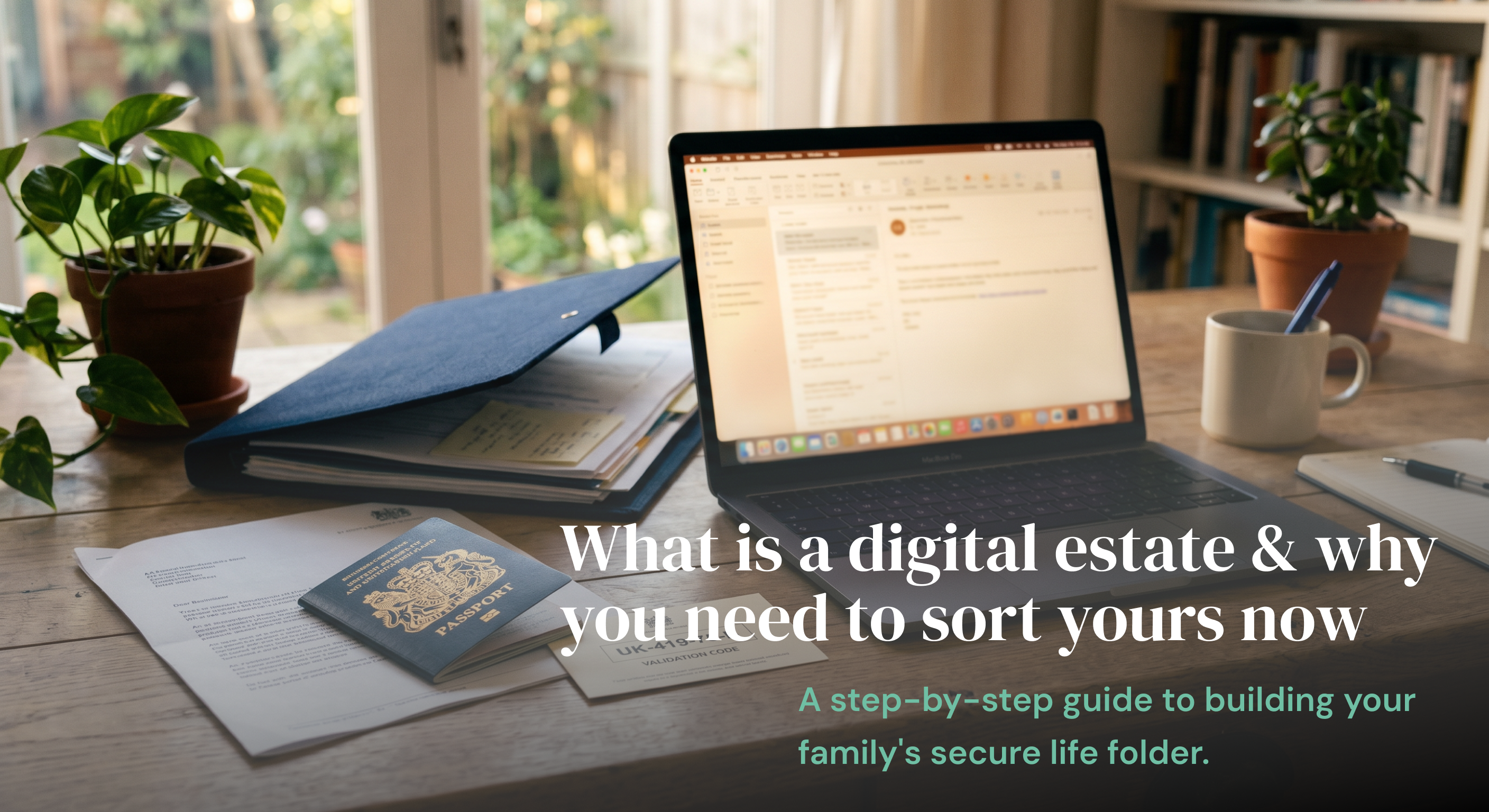
The problem is that they are scattered.
Some are in email inboxes.
Some are in drawers.
Some are saved on laptops.
Some are in cloud storage.
Some are only remembered by one person.
And when that person is not available, everything becomes harder.
Start with three things
You do not need to organise your whole life in one day.
Start with the basics:
- your will
- your main bank account
- one emergency contact
That alone puts you ahead of most people.
Then add insurance, property, medical details, and digital accounts over time.
A simple way to think about it
This is not about expecting the worst.
It is about reducing stress for the people you love.
If something happened to you, your family should not have to search through drawers, emails, passwords, and paperwork just to understand what needs to be done.
A little preparation now can make a very difficult moment easier later.
Final checklist
Here are the 12 areas to organise:
- Will
- ID documents
- Bank account details
- Insurance policies
- Property documents
- Pension and investments
- Debts and liabilities
- Digital accounts
- Medical information
- Emergency contacts
- Important instructions
- Access method
You do not need to do it perfectly.
You just need to start.
Because when it matters most, the people you love should not be left searching.