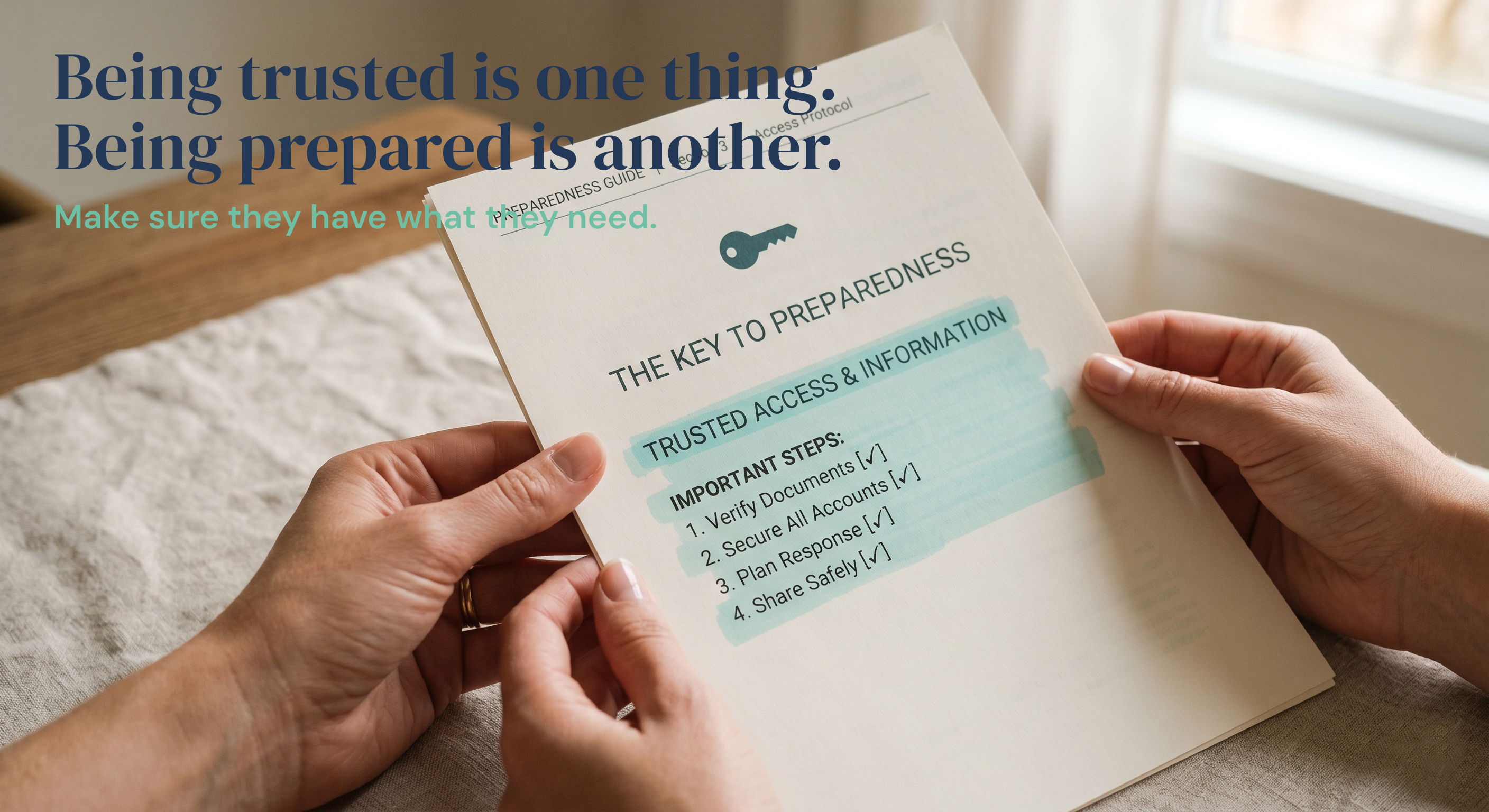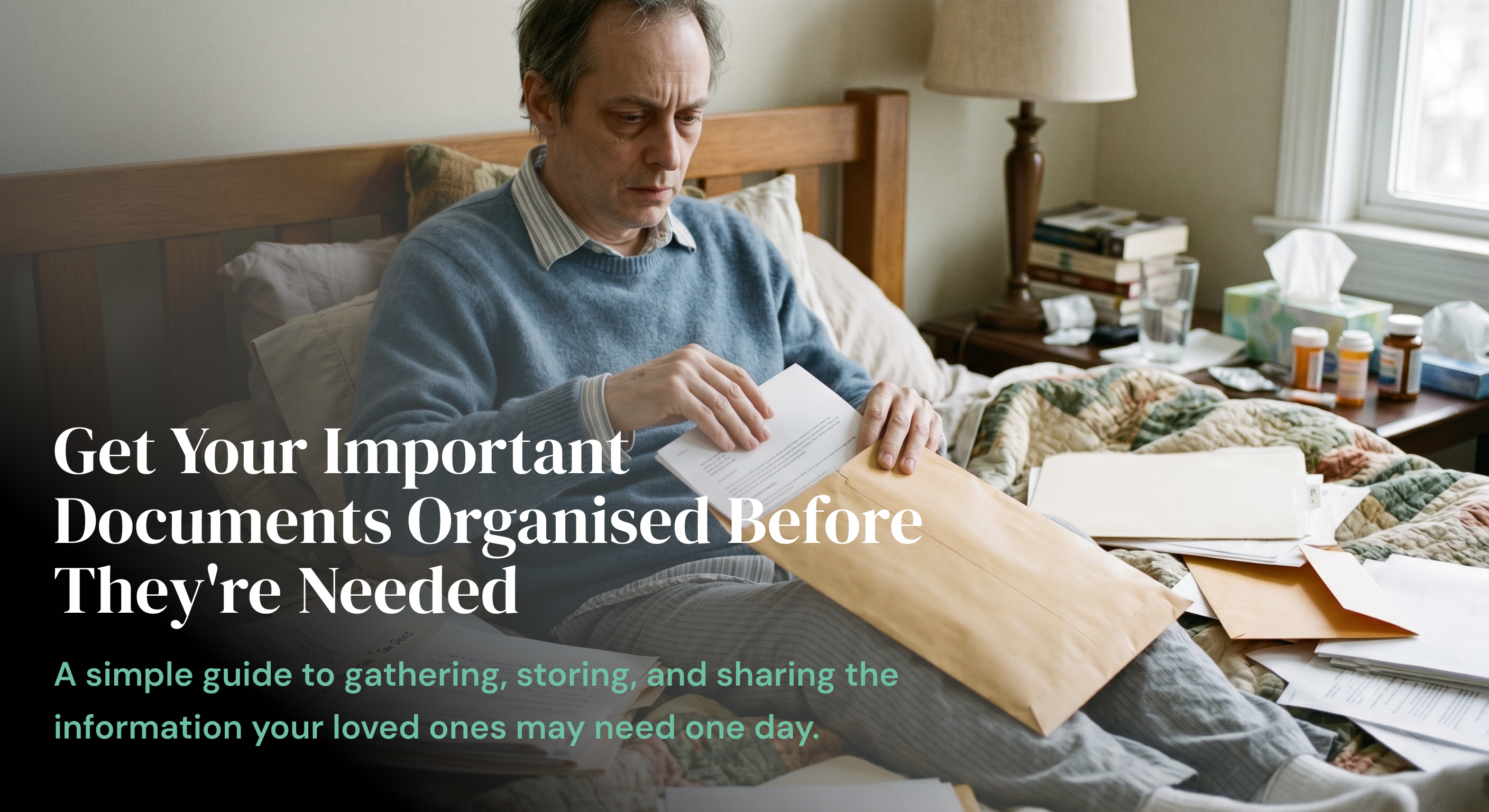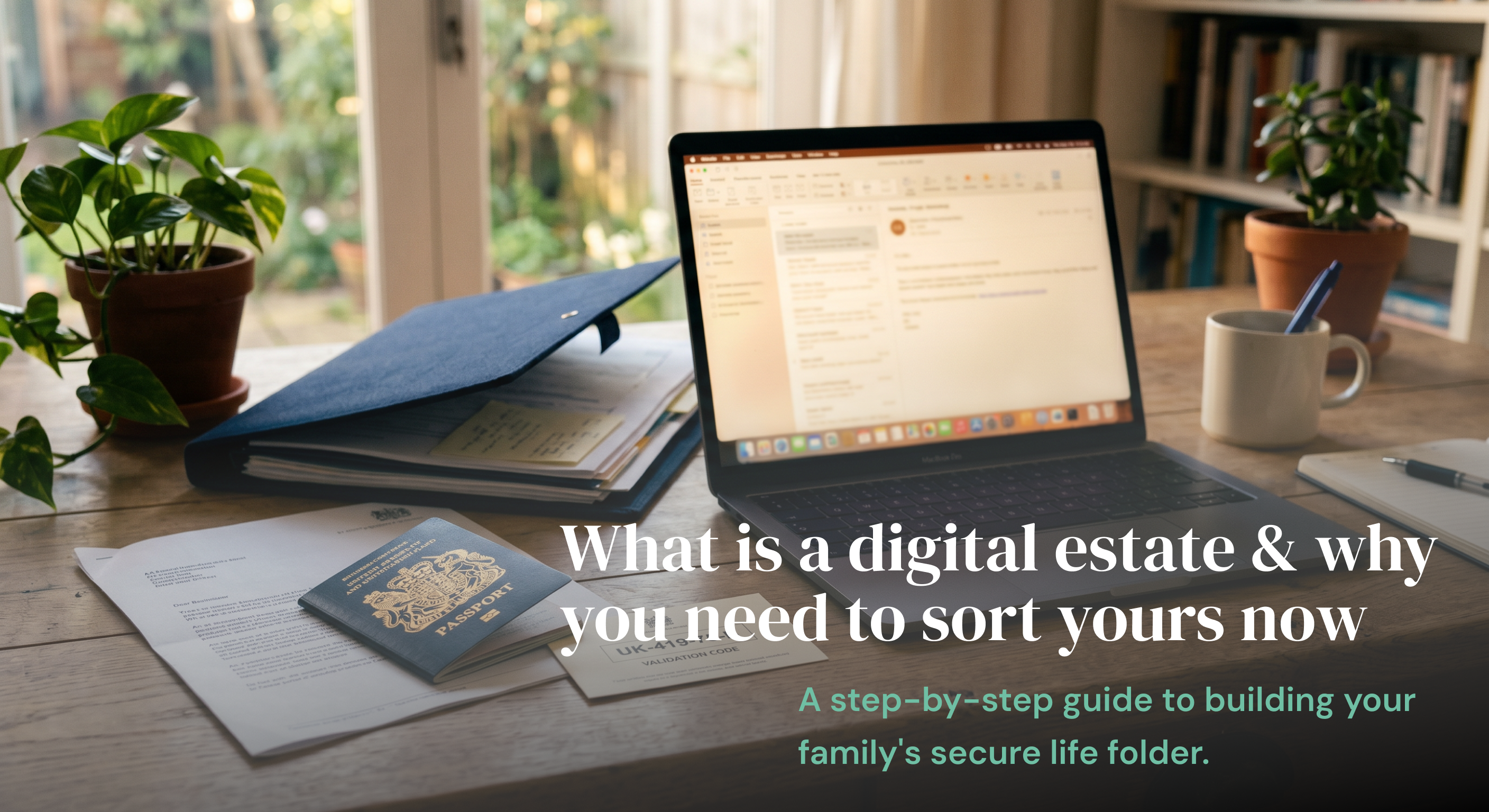

Most people do not have a life folder.
And most people’s families would struggle if something happened to them unexpectedly.
Those two things are connected.
A life folder, sometimes called a just-in-case folder, a family emergency folder, or an end-of-life folder. It is a single place where you keep the documents and information your family would need if you were no longer around to explain things yourself.
It is not morbid. It is one of the most thoughtful things you can do.
What is a life folder?
A life folder is a collection of your most important documents and information, organised so someone else can find and use them without you there to guide them.
It can be physical. A binder, an envelope, a filing box, or digital, or both.
The goal is simple: if something happened to you tomorrow, the right person could find what they need without spending weeks searching through drawers, inboxes, and filing cabinets.
Why most families are not prepared
When someone dies or becomes incapacitated, their family often faces a flood of immediate decisions.
They need to contact banks. Notify insurers. Locate a will. Understand what debts exist. Cancel subscriptions. Deal with property. Access medical information.
And they need to do much of this while grieving.
The problem is almost never that the information does not exist. The problem is that it is scattered, across emails, cloud accounts, paper files, old phones, and the memory of the person who is no longer available.
A life folder solves that. It pulls everything into one place, so the people you love are not left guessing.
What to put in your life folder
Here is a complete breakdown of what to include.
1. Your will
Your will is often the first document people look for.
Include a copy in your life folder, and note where the original is stored, whether that is with a solicitor, at home, or in a safe.
If you do not have a will yet, this is a reminder to make one.
2. Personal identification documents
Include copies of:
- passport
- driving licence
- birth certificate
- marriage or civil partnership certificate
- divorce decree (if applicable)
- National Insurance number
- any other official ID
These are needed for banks, insurers, legal processes, and probate.
3. Bank account details
Your family should be able to identify which banks you use and what accounts exist.
You do not need to include passwords, but note:
- the name of each bank or building society
- the type of account
- the account holder name
- who else is named on the account (if anyone)
Many families are surprised to discover accounts they did not know existed, or spend weeks trying to find the right institution to contact.
4. Insurance policies
List all active insurance policies, including:
- life insurance
- health or income protection insurance
- home insurance
- car insurance
- travel insurance
- any business insurance
For each one, note the provider, policy number, and who to contact to make a claim.
Life insurance in particular can go unclaimed simply because no one knew the policy existed.
5. Property documents
If you own or rent a home, include or reference:
- mortgage details (lender, account number, monthly payment)
- title deeds or land registry information
- rental agreement (if renting)
- details of any other property you own
Your family should not have to search for these during an already difficult time.
6. Pension and investment information
List all pension providers, investment accounts, shares, ISAs, and savings plans.
Include the provider name and any reference numbers. Your family does not need full access today, they just need to know what exists and where to start.
This is one of the most commonly overlooked areas. Pensions and investments can be genuinely lost if no record survives.
7. Debts and liabilities
Include details of:
- personal loans
- credit cards
- car finance
- any money owed to individuals
This includes both what you owe and what others owe to you.
Your family should not have to discover liabilities one unexpected letter at a time.
8. Digital accounts and passwords
Modern life is largely online, and digital accounts can be difficult to access or close without the right information.
Note which accounts exist, including:
- cloud storage (Google Drive, iCloud, Dropbox)
- social media accounts
- password manager (and how to access it in an emergency)
- online banking portals
- subscriptions and memberships
You do not need to include every password directly. But you should explain the system, whether that is a password manager, a trusted person who knows, or a secure document stored separately.
9. Medical information
In a health emergency, this information can matter immediately.
Include:
- current medications and dosages
- known allergies
- medical conditions
- blood type
- GP name and surgery contact
- any relevant medical history
- organ donation preferences
This section is especially important for spouses, adult children, carers, and anyone who may need to make decisions on your behalf.
10. Emergency contacts
List the people your family should contact if something happens, including:
- next of kin
- solicitor
- accountant or financial adviser
- doctor or GP
- business partner (if applicable)
- any trusted friends or relatives who hold important information
Include their names, roles, and contact details.
11. Funeral and end-of-life wishes
This is the section many people find hardest to write — and the one families find most comforting to have.
Include:
- whether you prefer burial or cremation
- any specific wishes for a service or ceremony
- preferences for your digital legacy (social media memorialisation, deletion, etc.)
- anything else you would like your family to know
This does not need to be long. Even a short paragraph gives your family something to hold onto.
12. Practical household information
Finally, include the everyday details that would otherwise only exist in your head.
For example:
- how bills are paid and which are on direct debit
- where spare keys are kept
- utility providers and account numbers
- who looks after pets and how
- important delivery or service arrangements
- any other things your household needs to function
These small details matter more than people expect. They can prevent a lot of confusion during an already difficult period.
Where to keep your life folder
There is no single right answer, but the most important thing is that the right person can access it when it is needed.
Physical folder: A dedicated binder, folder, or fireproof box kept somewhere secure at home. Clear and labelled.
Digital folder: A secure cloud location or encrypted folder. Consider using a service specifically designed for this, or a shared family storage location.
Both: Many people keep a physical copy for immediate access and a digital backup for safety.
Whatever you choose, tell your trusted person where it is. A perfectly organised life folder is useless if no one knows it exists.
Who should know about it
At minimum, one trusted person should know:
- that the folder exists
- where it is kept
- how to access it
This might be your spouse or partner, an adult child, a sibling, a close friend, or a solicitor.
You do not need to share every detail with everyone. But at least one person should be able to find and use everything if the moment comes.
How often to update it
A life folder is not a one-time task.
Set a reminder to review it once a year, perhaps at the same time as renewing insurance or filing taxes. Update it whenever anything significant changes: a new account, a new insurance policy, a move, a change to your will.
Out-of-date information is better than none, but current information is what actually helps.
Starting is the hard part
The idea of creating a life folder can feel overwhelming, or too final, or something to do later.
But it does not need to be perfect.
Start with the most important things:
- your will (or a note that you do not have one yet)
- your main bank details
- your life insurance policy
- one person who knows where to look
That alone puts you ahead of most people.
Add the rest over time. The goal is not perfection. The goal is that the people you love are not left in the dark.
Because the greatest gift you can give your family, after everything else, is not having to search.